
Cash-Acceptance vs Card-Only Kiosk Architecture: A Total-Ownership Spec Framework
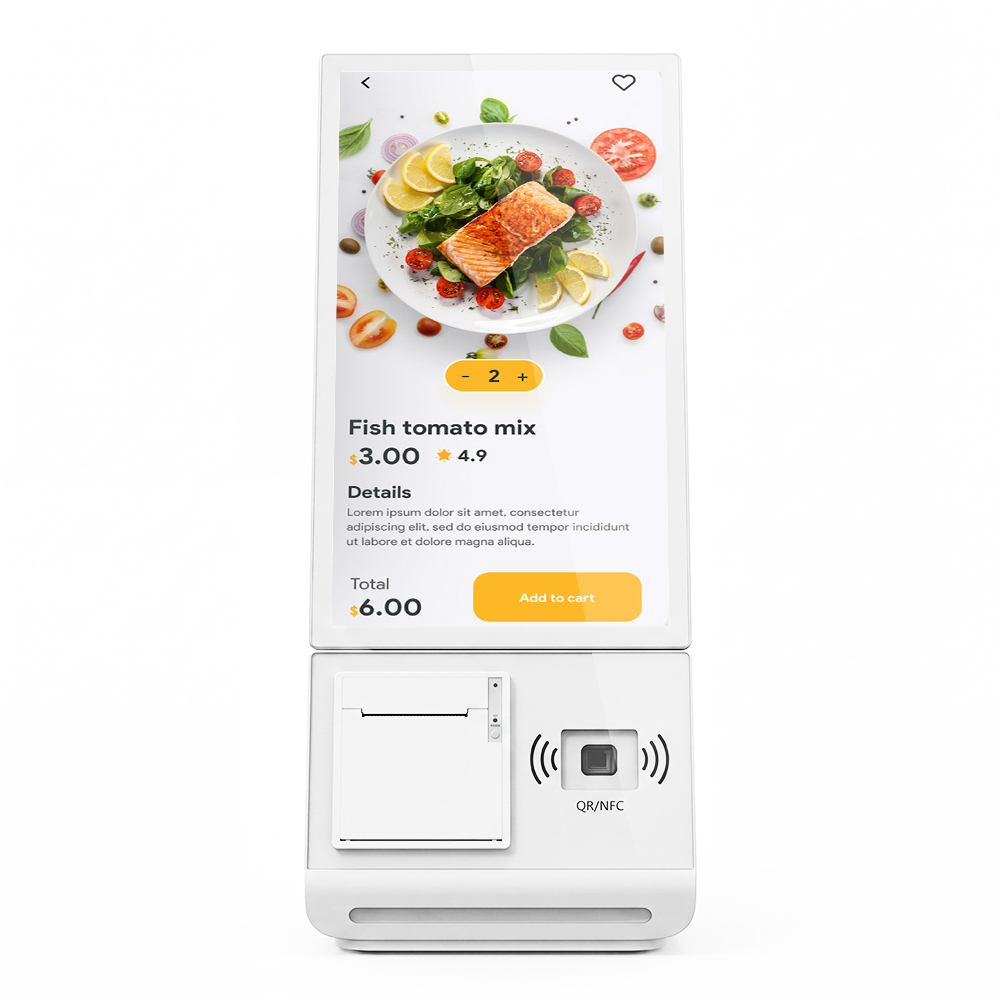
Cash-acceptance vs card-only kiosk architecture is the choice of which payment path the terminal must physically own: card-only kiosks carry a reader, antenna and gateway link, while cash-accepting kiosks add validators, coin handling, a secure vault and a collection cycle. The decision belongs in the requirement document, not the purchase order.
Why the Upfront Delta Is the Wrong Starting Point
The visible gap between a card-only terminal and a cash-accepting one is the smallest part of the ownership equation. The larger costs hide in module count, service call frequency, cash logistics, reconciliation labour and vault compliance — none of which appear on a quotation line item. Scoping cash-acceptance vs card-only kiosk architecture on unit price alone routinely picks the more expensive machine.
Most briefs arrive at a factory with the payment path already assumed. A distributor priced a card-only build and then discovers the deployment site has a cash-dominant customer base, or an integrator specifies cash and inherits a field service model it cannot staff. Industry guidance treats this as a strategic infrastructure question rather than a binary one, noting that in some applications cashless is the base payment path and in others cash is, which changes what “optional” means ([2]).
Cash vs Cashless Payment Kiosk: The Architectural Difference
The two architectures differ in what the unit physically handles. A card-only design is a data path: the terminal reads a token, sends an authorisation request and receives a response, so failure is mostly electronic. A cash-accepting design is a material path: it must validate, transport, store and account for physical value, so failure is mostly mechanical and the unit holds an inventory.
| Dimension | Cash-accepting | Card-only |
|---|---|---|
| Payment path | Physical note/coin validation and storage | Token read and network authorisation |
| Core modules | Validator, coin handling, vault, audit module | EMV reader, NFC antenna, PIN pad, gateway |
| Moving parts | Belts, rollers, diverters, stackers | Nearly none beyond a shutter or slot |
| Offline behaviour | Accepts and stores value without network | Transaction fails without connectivity |
| Compliance surface | Physical security, AML, collection controls | PCI DSS scope, PCI PTS, EMV |
Module-Level Comparison: What Each Architecture Actually Requires
Bill validator and coin acceptor kiosk module selection drives the cash-side lifecycle questions. A validator sets the note acceptance rate, the jam rate and the cleaning interval; a coin acceptor adds sorting and reject logic. The choice between a cash recycler vs cashbox kiosk then decides whether the unit reissues notes as change or simply accumulates them — a recycler reduces collection frequency but adds a mechanism that itself needs calibration.
The cash path
| Capability | Required module | Lifecycle question |
|---|---|---|
| Note acceptance | Bill validator | What acceptance and jam rate does the site tolerate? |
| Coin acceptance and change | Coin acceptor or hopper | Who restocks and how often? |
| Change dispensing | Cash recycler vs cashbox kiosk | Does reduced collection offset added mechanism? |
| Value storage | Secure cashbox (locked, tamper-aware) | What is the vault specification and key custody? |
| Accountability | Audit trail module | Can every note be reconciled to a transaction? |
The cardless-path modules
| Capability | Required module | Lifecycle question |
|---|---|---|
| Card presentment | EMV L1/L2 reader | Which scheme approvals does the reader hold? |
| Contactless | NFC antenna | What read distance does the enclosure allow? |
| Wallet or mobile code | QR scanner | Does scanning require illumination tuning? |
| PIN entry | PIN pad (PCI PTS approved) | Is the keypad shielded in the enclosure design? |
| Settlement | Payment gateway integration | Which host and ISO 8583 variant is in scope? |
Which Payment Modules Fail Most Often, and What That Costs You
Failure concentrates in the mechanisms that touch physical media, plus the card path’s weakest electronic link. Field-replaceable modules change the cost profile: a part an operator can swap in minutes removes a truck roll entirely. Remote monitoring and uptime depend on whether the unit reports a jam before a customer finds it.
- Note jams in the validator path. Cause: folded, damp or non-conforming notes, or debris in the note path. Service implication: an on-site clear-out and a recalibration visit if the jam repeats.
- Roller and belt wear. Cause: cumulative friction over transaction volume. Service implication: scheduled replacement, ideally as a field-replaceable module rather than a depot repair.
- Sensor contamination. Cause: dust, paper fibres and note coating on optical sensors. Service implication: cleaning intervals must be defined in the maintenance contract or acceptance rates drift down silently.
- Note-path obstruction. Cause: foreign objects, adhesive residue or a mis-seated cassette. Service implication: the unit goes out of service until a technician opens the cabinet.
- Card reader wear or misalignment. Cause: contact-plate abrasion and insert force. Service implication: reader replacement, with the caveat that a replacement must re-qualify against scheme approvals.
- Connectivity-to-gateway loss. Cause: site network instability, SIM or WAN faults, gateway downtime. Service implication: card transactions stop outright — cash-accepting units keep trading through a network outage, which changes the downtime window rather than eliminating it.
A cashless payment kiosk typically carries 30–50% lower annual maintenance costs than a cash-accepting terminal, while cash modules remain essential for paper-currency markets ([1]). Treat that range as directional: it is supplier-specific and will not transfer to your service contract unchanged.
Secure-Vault Expectations and Compliance Surface
Cash handling and cashless payment kiosks carry two separate risk surfaces, and the buyer must scope both. The cash side is physical: vault construction, lock type and key custody, tamper detection, collection frequency, dual-control collection and the audit record that ties a removal to a transaction. The card side is informational: which components fall inside PCI DSS scope, whether a P2PE or point-to-point encrypted design reduces that scope, and which approvals the reader and PIN pad hold.
- Which PCI DSS v4.0 requirements apply to our configuration, given the standard took effect in March 2024 with new requirements fully enforced from March 2025?
- Does a validated P2PE solution remove the terminal from our card-data environment scope, or only reduce it?
- Do our chosen reader and PIN pad hold PCI PTS approval and EMV L1/L2 type approval for our acceptance region?
- If we accept cash, what AML and record-keeping obligations apply to us at this transaction size?
- Who performs reconciliation, and what evidence proves the vault count matched the transaction log?
These are scope questions, not compliance assurances. The answer depends on the payment provider, the acquirer and the jurisdiction, and no supplier can certify them on your behalf.
Total Cost of Ownership: The Variables That Actually Move the Number
Kiosk total cost of ownership cash vs card comparison should be built from drivers, not unit prices. The table below marks which architecture carries more weight per driver; it is a directional framing, since module-level pricing, cash logistics charges and service contract rates are supplier- and region-specific.
| Cost driver | Heavier on cash-accepting | Heavier on card-only |
|---|---|---|
| Module count | Yes — validator, coin handling, vault | No |
| Service call frequency | Yes — mechanical wear and jams | Lower, but reader replacement still applies |
| Cash logistics and collection | Yes — collection, transport, vaulting | None |
| Reconciliation labour | Yes — count, balance, investigate | Automated by gateway settlement |
| Connectivity dependency | Lower — trades during outages | Yes — an outage halts payment |
| Audit and compliance overhead | Physical security plus AML | PCI DSS scope and scheme approvals |
| Expected service life | Shorter on mechanisms | Longer, mechanism-light |
The number moves with transaction density and average ticket size. High cash volume makes collection and reconciliation the dominant line; low cash volume leaves a fixed module cost with almost no utilisation. Restaurant self-ordering kiosks, retail checkout kiosks, hotel self-check-in kiosks and ticketing kiosks each sit differently on that curve.
A Transaction-Density Rule for Choosing Hybrid
Cash handling and cashless payment kiosks differ mainly in how much idle mechanism they carry. Test the site against three conditions before adding a payment path.
- Low density, card-competent customers. Card-only removes the most cost, because the cash modules would sit idle while still entering the maintenance contract.
- Mixed density. Hybrid earns its module count when cash acceptance adds transactions the card path would otherwise lose, and when collection frequency stays below roughly a weekly cycle.
- Cash-dominant sites. Here cash is the base payment path — hospital registration kiosks in cash-heavy catchments and ticketing kiosks in low-banked areas — and card becomes the optional addition.
Can One Kiosk Accept Both Cash and Card?
Yes. A hybrid kiosk runs both stacks in one enclosure: a validated note and coin path feeding a secure vault, alongside an EMV and contactless card path routed to a gateway. The two operate independently, so a network outage leaves cash acceptance working while card transactions are declined.
Hybrid introduces integration questions a single-path build never asks:
- Module count and internal space. Both stacks plus a vault must fit the enclosure without crowding service access.
- Power and thermal budget. Validators, recyclers and readers add continuous and peak draw inside a sealed cabinet.
- Enclosure design implications. Cash entry, card slot, PIN privacy and vault door all constrain the form factor and the mounting options.
- Single audit trail. Cash counts and card settlements must reconcile into one transaction record, not two systems.
- Peripheral integration constraints. Windows, Android and Linux kiosk hardware each handle serial, USB and HID peripherals differently, which shapes what the self-service kiosk OEM ODM partner can commit to at brief stage.
A 2D barcode scanner paired with a dedicated cashless terminal reflects how retail checkout kiosks typically hybridise, while maintaining industrial-grade components such as 7H hardness glass and IP65 protection for high-traffic and outdoor units ([3]).
Resolve these questions before the RFQ, not after: payment path, module list, vault specification, collection model, compliance scope and the peripheral platform. Enclosure, display and compute decisions follow — see optical bonding vs air gap for industrial touch monitors for the display side, and re-budgeting commercial display memory and compute plus rebasing data-connected signage RAM and NAND budgets and rebasing OEM memory tiers against the Q2 2026 downturn for the compute tiers that fund the extra payment modules.
Content reviewed: 2026-09-13.
Evidence confidence
Confidence: Medium. This rating reflects cross-checking 3 sources across 3 independent domains. It measures evidence coverage, not certainty; verify safety-critical work against manufacturer instructions and local requirements.
References
APA 7th edition
- ↑Qtenboard. (n.d.). Cash vs Cashless Payment Kiosk: B2B Technical Selection. Retrieved September 13, 2026, from https://www.qtenboard.com/factory-news-658.html.
- ↑Kioskindustry. (2026). Cash Acceptance vs. Cashless Transaction Costs – Part 1. https://kioskindustry.org/cash-or-cashless-transaction-part-1/.
- ↑Touchwo. (n.d.). Which Kiosks Offer Contactless and Cashless Payment. Retrieved September 13, 2026, from https://touchwo.com/contactless-cashless-payment-kiosks.
You should also read:

Rugged Tablet SoC and Thermal Budget: A Compute and Connectivity Spec Checklist for Warehouse & Mobile POS Fleets
Rugged Tablet Soc And Thermal Budget is the decision framework examined in this guide. The sections below turn sourced evidence into practical comparison criteria without overstating what the available research can prove. Spec a rugged tablet’s SoC and thermal budget around your duty cycle, not…
Continue reading...
Open-Frame vs Laminated Wall-Mounted Signage for Restaurant Kiosks: A Panel-Bonding ROI Comparison
The Spec Fork Every Integrator Meets on a QSR Wall Building a restaurant wall terminal comes down to one decision: do you source an open-frame touch panel and own the enclosure, bezel, and bonding yourself, or buy a fully laminated, ultra-narrow-bezel unit delivered as a…
Continue reading...
Open Frame Panel PC Connectivity and: RS-232, USB and Power Contracts for Embedded Kiosks
Open frame panel PC connectivity and I/O planning is the highest-leverage decision you make before the compute platform is chosen, because the ports and power contract you lock into the BOM determine which peripherals can ever attach. For system integrators building self-service kiosks, the connectivity…
Continue reading...